


Why visualisation matters more in Home & Garden than most categories
Home & Garden shoppers have different behaviours from other sectors.
One reason is because customers are not only assessing the product, but also imagining how that will physically interact and impact their environment.
Customers are asking: Will this fit my space? Does the colour work with my existing designs? Is the scale right? Will it suit my design layout? Can I personalise the configuration?
When unanswered, these questions create friction, which leads to abandonment. With higher costs comes greater consideration, and therefore the more chance a customer will hesitate.
Unlike general ecommerce, ‘reduce friction and remove obstacles’ doesn’t work in Home & Garden. Visualisation is one tool that can help build enough reasons for a customer to buy.
Here is why Visualisation tools can help.
By bridging the gap between a product page and reality, they provide experiences that help customers make decisions with greater confidence and the impact is not just limited to conversion rates.
Visualisation tools can mean the following:
- Higher customer confidence
- Reduced product returns
- Longer site engagement
- Increased average order values
- Lower purchase hesitation
- More opportunities for personalisation and upselling
For brands operating in high-ARP categories, these gains can be significant.
There are many tools available with different applications. Below, we explore the types of tools and how they are best suited.
Augmented reality: bringing products into real spaces
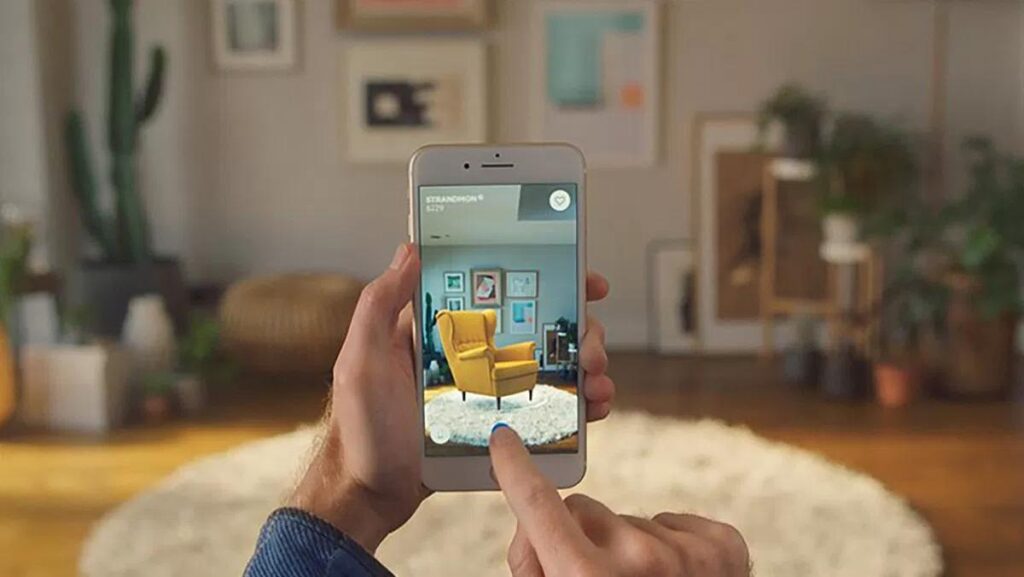
Augmented reality has become one of the most well-known forms of visualisation technology within Home & Garden retail. By allowing customers to place products directly into their own home through a smartphone camera, AR removes one of online shopping’s biggest challenges: understanding scale and context.
The best use cases are products where physical presence heavily influences decision-making. Large furniture pieces, garden structures and decorative items all benefit because customers can immediately decide whether a product feels right for their space.
The importance of AR extends beyond novelty. For high-ticket products in particular, uncertainty around sizing and placement is often one of the biggest causes of hesitation. AR helps move customers closer to purchase because it replaces guesswork with reassurance.
Room visualisers: solving the “can I picture it?” problem
Some products create less concern around size and more around aesthetics. Room visualisers tackle this challenge by allowing users to upload photographs of their own spaces and digitally test products before purchasing. Rather than imagining a flooring finish or paint colour, customers can preview options in a realistic setting.
This technology is increasingly common across categories such as flooring, wallpaper, paint or landscaping products.
From a behavioural perspective, these tools create an interesting shift; rather than browsing products, customers begin using them. They experiment, compare alternatives and become invested in creating a preferred outcome.
That level of engagement can produce substantial commercial benefits. Customers often spend longer on-site and build stronger emotional attachment to decisions before buying.
Product configurators: turning choice into interaction
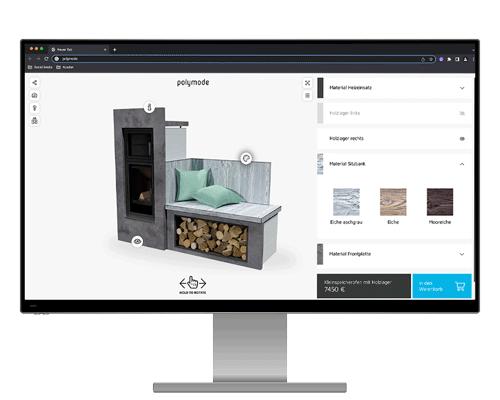
As product ranges become more personalised, configurators are becoming more vital. Customers no longer expect to simply choose products; they expect to customise them.
Configurators allow users to make selections and instantly see visual changes in real time. Instead of choosing from static dropdown menus, customers can actively build products that reflect their needs and see them in real time.
Common configurable elements include:
- Colours
- Materials
- Fabric options
- Sizes
- Layouts
- Accessories
- Modular arrangements
For example, a garden furniture retailer may allow users to configure frame finishes, seating arrangements and cushion combinations and see it update in real time.
The commercial opportunity here extends beyond experience. Configurators naturally create upsell opportunities because customers become more invested in building a personalised product. Additional modules, upgraded materials and premium finishes become part of the design journey rather than add-ons introduced at checkout.
3D product viewers: replacing static product photography

Traditional pages remain heavily reliant on photography, yet static imagery has limitations.
Even with multiple angles, customers are still consuming a product passively.
3D product viewers create a more exploratory experience by allowing users to rotate, zoom and inspect products. This approach gives customers a better understanding of product quality, material detail and construction.
The best use cases usually include furniture, kitchens, equipment or outdoor items like BBQs or pergolas.
For premium products, this additional layer of transparency can have a meaningful impact. Customers gain confidence because they feel they have inspected the product themselves rather than simply viewed a gallery.
The bigger insight: visualisation is becoming a sales tool; not a UX feature
The broader trend here is that visualisation technology is gradually moving away from being viewed as a design enhancement or optional feature. Increasingly, it is becoming part of the sales process itself.
As customer expectations evolve, product pages need to become more interactive, personalised and immersive. Merchants that remove uncertainty from purchasing decisions gain an advantage. This is particularly true in the Home & Garden category, where order values are high and customer hesitation is common.
For Home & Garden brands operating on Shopify, the question is becoming less about whether visualisation technology should be adopted and more about which tools create the greatest commercial value.
The strongest implementations are rarely about technology for technology’s sake. They are designed around reducing friction, increasing confidence and helping customers visualise ownership before purchase.