In Home & Garden, the person browsing is rarely the only person deciding
A sofa, a patio set or a bathroom suite is almost never chosen by one person. It gets discussed over dinner, sent to a partner mid-afternoon and measured against a room. Sometimes it is run past a parent helping with the cost, or a builder or designer who will fit it.
Most stores are built as though one shopper arrives, decides and pays in a single sitting. That is the opposite of how a considered purchase actually works in this sector. The shopper in your analytics is often the researcher: the one who does the legwork, then has to persuade someone else.
That changes your store’s job. It still has to convince the person browsing. But it also has to equip them to convince everyone else, because if they can’t, the sale stalls quietly and you never see why.
What the second decision-maker actually needs
The second person usually arrives cold. They’re aware of the need for a new sofa, but they haven’t seen the three other options, read the reviews or spent an evening on your site. They often land on a different device, a phone at lunchtime or a laptop in the evening, with no idea what the first person has already ruled out.
Their questions are different too. The researcher cares about range, specification and detail. The person they are persuading tends to ask simpler, sharper things:
- What does it look like, and will it suit the room or garden?
- How much is it, all in, including delivery?
- When would it arrive, and who installs it?
- Can we spread the cost?
- What if we change our minds?
The second person often decides on gut feel, so if your product page can’t answer these quickly, the decision is rarely in your favour.

Make sharing a feature, not an afterthought
The simplest fix is to let shoppers send what they are looking at, in one tap, without friction. A few details decide whether it works:
- Share from the places people pause. Product pages, saved lists, baskets and configured designs all need a visible share option, not just the browser’s address bar.
- No login to view. A shared link that asks the second person to create an account before they can see anything usually stops the conversation.
- Preview properly. When the link lands in a messaging app, it should show the product image, name and price, not a bare URL.
- Work on a phone first. The link will probably be opened on one.
- Keep it live. The link should still work in two weeks, when the couple finally sit down to decide.
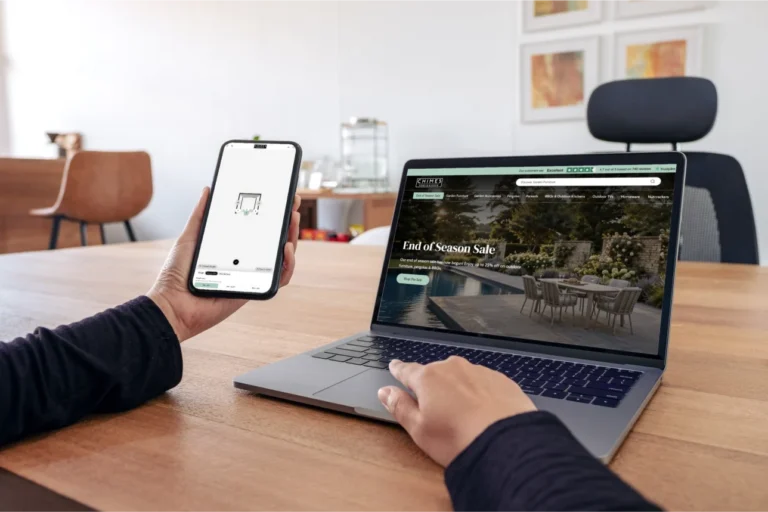
For Chimes, the bespoke pergola configurator lets customers save a design and send it to someone else. A pergola is a high-value purchase that gets discussed with a partner and measured against the garden, so a design that can’t be shared is a sale that stalls. We built save and share into the configurator for exactly that reason.
The same principle applies without a configurator. A saved list of three sofas, a basket of garden furniture or a short list of tiles can all be sent.
Give the sharer something worth sending
A link to a product page isn’t much of a pitch. The person sharing is, in effect, presenting your product to someone else, so give them something that does the explaining.
A good shareable summary has:
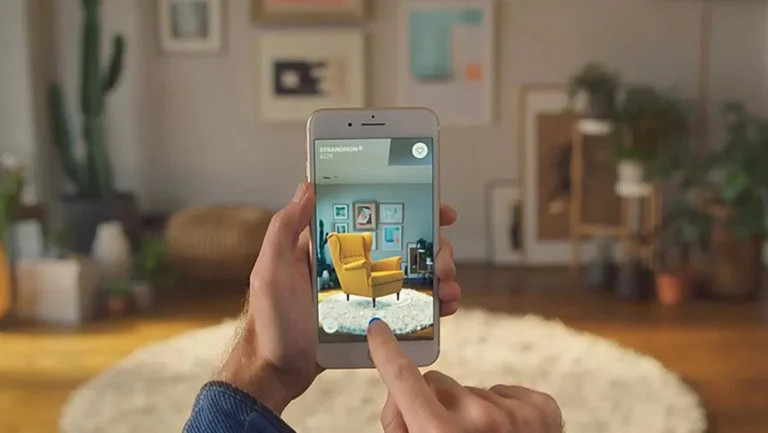
- A clear image of exactly what they picked, including the colour, size or finish.
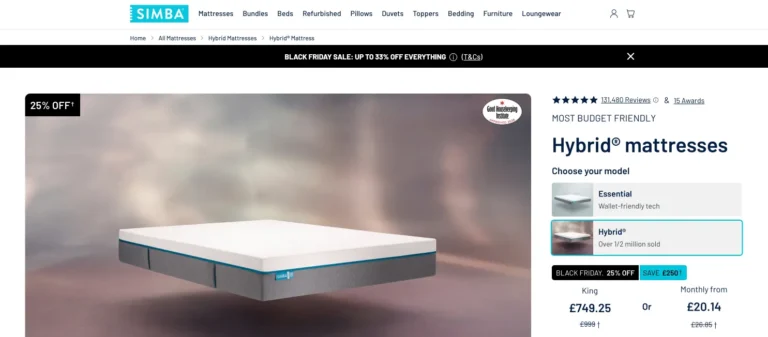
- The full price, with delivery included or clearly stated.
- The key specification in a few lines: dimensions, materials, what’s included.
- Delivery timing and any installation, so the practical questions are answered up front.
- Finance options, if you offer them, shown as a monthly figure alongside the total.
- A way to ask a question, such as a phone number or live chat, for the things a summary can’t cover.
For products where touch and colour matter, such as fabrics, rugs and wallpaper, the same logic extends to samples. Letting a shopper order swatches for two people to look at together is a shared decision, not just a sample request.
Bring the second person into the offline steps
For many Home & Garden brands, part of the decision happens away from the screen: a showroom visit, a phone call, a consultation. These are often where the second person finally gets involved.
Design those moments for two:
- Invite both people. “Bring your partner” on a showroom booking is a small line that matches how people actually buy.
- Make appointments easy to book as a pair. Offer evening and weekend slots, since both people are rarely free on a weekday.
- Let the phone team see what was shared. If a customer calls with a saved design or list, the adviser should be able to open it, rather than start from scratch.
- Offer a call-back to the second person. Sometimes the partner has the questions, not the researcher.
These steps rarely show up in an online conversion rate, which is why they are easy to overlook. They are often where a stalled decision gets moving again.
Follow up on the shared journey, carefully
Once someone has saved or shared something, follow-up should reflect that. A reminder that shows the exact design or list they saved, with the price and a link back to where they left off, is far more persuasive than a generic basket email.
Two cautions keep it useful rather than intrusive:
- Only contact people who have given you their details. The second person is anonymous until they act. If they choose to sign up or get in touch, that’s the moment to follow up with them, with consent.
- Match the timing to the purchase. Garden structures and furniture can take weeks to decide. A well-spaced reminder works better than a rapid sequence, and a seasonal prompt before the spring peak can be more relevant than a discount.
The Klaviyo flow we are planning for Chimes’ saved designs follows this approach: it sends customers their own design with an image, price and a link straight back in.
Measure the decision-maker you can’t see
Standard reporting credits a sale to the person who completed it. It says nothing about who else was involved. You can still build a picture of the shared journey from signals you already have:
- Shares and saves: how many shoppers send a design, list or basket, and from which pages.
- Share-link visits: how many people open a shared link, and on which device.
- Return visits after a share: a second visitor arriving through a link, then the original shopper coming back, is a strong sign of a joint decision.
- Time from save to order: a long gap isn’t a problem in this category. It’s the normal shape of the decision, so use it to time your follow-up.
- Offline outcomes: showroom visits and calls that follow a share or save, where you can track them.
Don’t chase a single benchmark. What matters is how your own numbers move once sharing is easier, and whether more shared journeys end in an order, a visit or a call.

Where to start
You don’t need to rebuild your store. Work through these in order:
- Add a share option to product pages, saved lists and baskets, using a link that opens without a login.
- Fix the preview. Check how a shared link looks in WhatsApp, iMessage and email.
- Build a simple summary of what was shared: image, price, delivery, finance and a contact route.
- Invite two people into your showroom booking and phone journeys.
- Start tracking shares, share-link visits and the time between save and order.
Most Home & Garden brands lose sales they never see, because the person deciding isn’t the person browsing. Build for both, and the stalled decision has somewhere to go.
The second decision-maker will never fill in a form or leave a review. They will open a link, glance at a price and say yes, no or not yet. Every step that makes that moment easier, a clear summary, a link that just works